
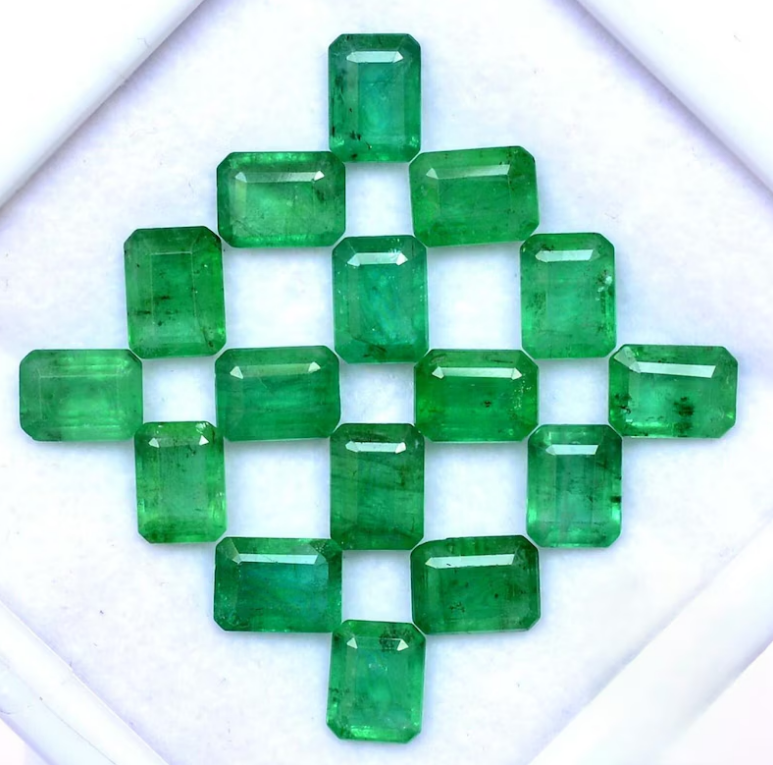
What is Emerald?
Emerald is a variety of the mineral beryl, colored green by trace amounts of chromium and sometimes vanadium within its crystal structure. It belongs to the same mineral family as aquamarine, morganite, and heliodor, but it stands apart from all of them in terms of prestige, value, and cultural significance. The name emerald comes from the ancient Greek word “smaragdos,” meaning green stone, a testament to how deeply its color has defined its identity throughout history.
What makes a fine emerald truly extraordinary is the specific quality of its green — a rich, warm, slightly bluish green that gemologists describe as “emerald green” and that no other gemstone can fully replicate. This color, combined with the natural inclusions that give each stone its unique character, makes every fine emerald a completely individual creation of nature.
A Gemstone With a Royal History
Few gemstones can claim a history as long, as dramatic, and as deeply intertwined with human civilization as emerald. The oldest known emerald mines, located in Egypt near the Red Sea, date back to at least 330 BC and were actively mined during the reign of Cleopatra, who was famously obsessed with the stone. She considered emeralds a symbol of eternal life and wore them constantly, even giving them as gifts to foreign dignitaries as tokens of her power and status.
The ancient Egyptians were not alone in their reverence for emerald. In pre-Columbian South America, the Incas and Aztecs worshipped emerald as a sacred stone, using it in religious ceremonies and offerings to their gods. When Spanish conquistadors arrived in the 16th century, they discovered emeralds of breathtaking size and quality that had been mined from Colombian deposits for centuries. These Colombian emeralds quickly found their way into the crowns, jewelry, and treasuries of European royalty, fueling a passion for the stone that has never diminished.
In ancient India, emerald was considered one of the Navaratnas — the nine sacred gemstones of Hindu astrology — and was associated with the planet Mercury, believed to bring wisdom, eloquence, and good fortune to its wearer. The Mughal emperors were particularly passionate collectors of emerald, engraving prayers and floral motifs onto large stones and wearing them as talismans of divine protection.
Colors and Quality
The value of an emerald is determined primarily by the quality and intensity of its color. The finest emeralds display a vivid, saturated green with a slightly bluish secondary hue — often described as “Colombian green” after the country that produces the world’s most prized specimens. Stones that are too light in color are classified as green beryl rather than emerald, while stones that are too dark lose the brilliance and transparency that make fine emeralds so captivating.
Unlike diamonds, where clarity is paramount, emeralds are almost universally included — so much so that their inclusions have been given a special name by the gem trade: “jardin,” the French word for garden. These inclusions, which can appear as fine needles, crystals, or liquid-filled cavities within the stone, are considered a natural and accepted part of an emerald’s character. An emerald with no inclusions visible to the naked eye is extraordinarily rare and commands a significant premium. Most emeralds on the market are treated with cedar oil or resin to fill surface-reaching fractures and enhance their clarity and color — a widely accepted and standard practice in the gem trade.
Origins and Sources
Colombia remains the world’s most prestigious source of emeralds, producing stones of unmatched color saturation and quality from mines including Muzo, Chivor, and Coscuez. Colombian emeralds are prized above all others for their warm, pure green color and are considered the benchmark against which all other emeralds are measured.
Zambia is the world’s second most important source of emeralds, producing stones with a slightly cooler, more bluish-green color and often excellent clarity. Brazilian emeralds tend to be lighter in color but are increasingly appreciated for their natural clarity. Other notable sources include Zimbabwe, Ethiopia, Afghanistan, and Madagascar, each producing stones with their own distinctive character and color profile.
Physical Properties
Emerald has a hardness of 7.5 to 8 on the Mohs scale, making it reasonably durable for everyday wear. However, its natural inclusions can make it more susceptible to chipping or cracking if subjected to sharp blows, so protective settings are always recommended. Emerald is best cleaned with a soft cloth and mild soapy water — ultrasonic cleaners and steam cleaning should be avoided, as they can damage the oil or resin treatments that most emeralds carry and worsen the appearance of existing fractures.
Why Emerald Endures
In an age of synthetic stones and laboratory-grown alternatives, natural emerald remains one of the most coveted and emotionally resonant gemstones in the world. Its color is unmatched, its history is unrivaled, and its ability to connect the wearer to something ancient, powerful, and deeply beautiful is unparalleled. From Cleopatra’s Egypt to the Mughal courts of India, from the mines of Colombia to the jewelry boxes of modern collectors, emerald has always been — and will always remain — the eternal green treasure of the world.
Whether you are a jewelry designer seeking a stone that commands instant recognition and desire, or a collector drawn to the history and rarity of one of nature’s most magnificent creations, emerald is a gemstone that never disappoints and never goes out of style.